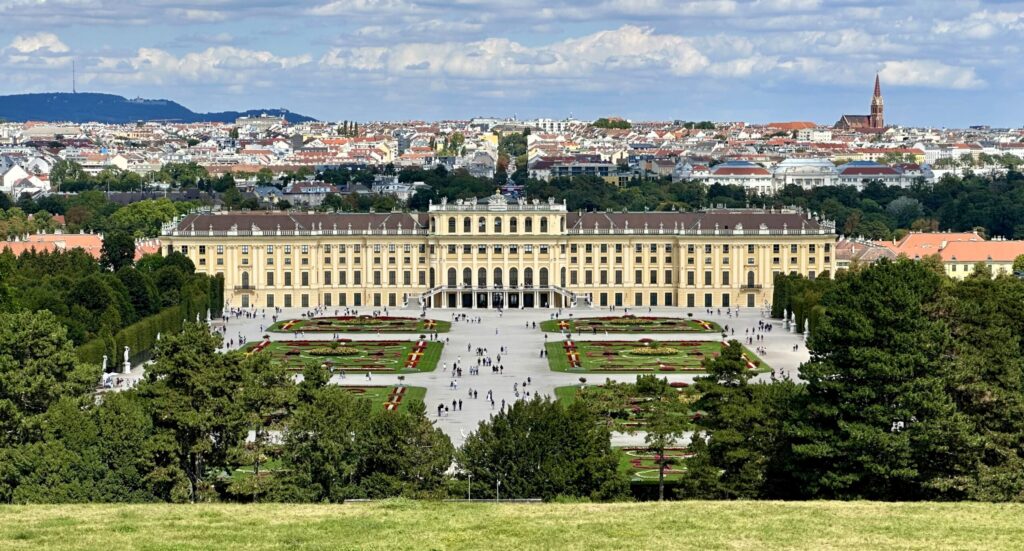
Madlen Grau is doing her doctorate at the Professorship for Entrepreneurship and Business Taxation. In August, she travelled to the TU Wien (Vienna, Austria) for a research stay with partners.
Your research topic briefly explained: What is it about and what makes it so exciting for you?
My doctoral thesis examines how small and medium-sized enterprises (SMEs) can be managed effectively in the context of scarce resources and increasing sustainability requirements. The focus is on the new European Sustainability Reporting Standards (ESRS) – in particular the planned voluntary EU standards (VSME) for SMEs – and the question of how their logic relates to practical governance. I am interested in how reporting and control structures can be designed in such a way that they create transparency without overburdening SMEs, while at the same time supporting responsible decision-making processes. What I find particularly exciting is the moment when abstract regulations suddenly have very concrete effects on companies, employees and regional value creation. My research aims to provide guidance at this interface between standards, management practice and social responsibility.
What did your stay abroad bring to your PhD project?
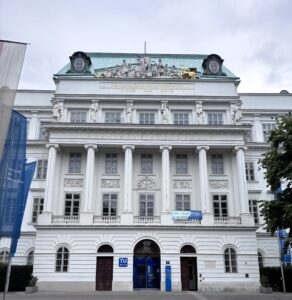
My stay at TU Wien really inspired me and noticeably advanced my dissertation project. In just a few days, we were able to develop the structure of our publication together, write key sections and specifically work through how the requirements of VSME and ESRS can be applied to SMEs. It was particularly helpful that we were in constant direct communication. Every idea was immediately discussed, sorted and directly translated into text if it was convincing. Step by step, a common thread for the paper emerged, which I can now use as a good guide for my doctoral thesis. I came to Vienna with an idea and returned with a detailed, tangible concept. We also set a realistic schedule for submission and assigned the next tasks. For my doctoral thesis, this means above all more clarity, more structure and a concrete publication that is currently well on its way.
What did you gain personally?
Personally, my stay gave me confidence in my own research process. The intensive collaborative writing period, outside of the everyday university routine, demonstrated how productive I can be when I am fully focused on a project. It was also very motivating to experience how openly and appreciatively my ideas were received. The stay showed me that I have truly arrived in research. In addition to the professional collaboration, I got to know Vienna in a different way: as a place where city life, exchange and concentrated work go together surprisingly well. I arrived with many questions. I returned with a much clearer sense of direction. I now have a better idea of how to proceed with my doctoral project. And I have a clear picture of the role I would like to play in university research in the long term. This experience has had an impact that goes far beyond the few days I spent there.