Laura Hohlfeld, a doctoral candidate at the Institute for Nanoscale and Biobased Materials, on her experiences at the European School on Rheology 2025 in Leuven, Belgium.
Your research topic briefly explained: What is it about and what makes it so exciting for you?
I am researching stimulus-responsive biomaterials – materials that change in a specific way when their environment changes, for example due to temperature, pH or light. My project is about structuring such materials in such a way that they can be used for ‘smart’ applications – for example, for wound pads with controlled release of active ingredients or membranes for heavy metal removal. What’s exciting is that these materials are so complex and versatile – you have to understand them properly before you can engineer them. To deepen my understanding, I attended the European Rheology School at KU Leuven – mainly because rheology, the science of the flow and deformation behaviour of materials, is a common thread in my work and helps me to classify the properties of my systems precisely.
How did your time abroad contribute to your doctoral project?
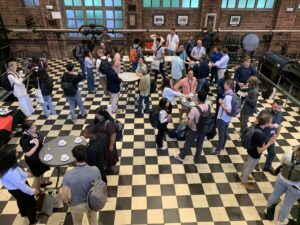
The week was intense, informative and incredibly well organised. In addition to lectures on fundamentals, mathematical concepts and rheological phenomena, there were laboratory demonstrations, practical exercises and many opportunities for discussion. This was particularly valuable for my doctoral project because rheology is an important basis for characterising my materials – and this knowledge is also central to my working group. I wanted to take my experiments and data analysis to the next level – and that’s exactly what this week made possible. The diversity of the participants was particularly exciting: they all came from very different fields, which showed just how versatile and adaptable rheological methods can be. The atmosphere was open and supportive; everyone was willing to help each other, share experiences and find solutions together. At the end of the week, we all felt the same way: our heads were full of new impressions, and at the same time it became clear how deeply you can dive into a topic to really understand it – an experience that was both challenging and motivating.
What did you gain personally?
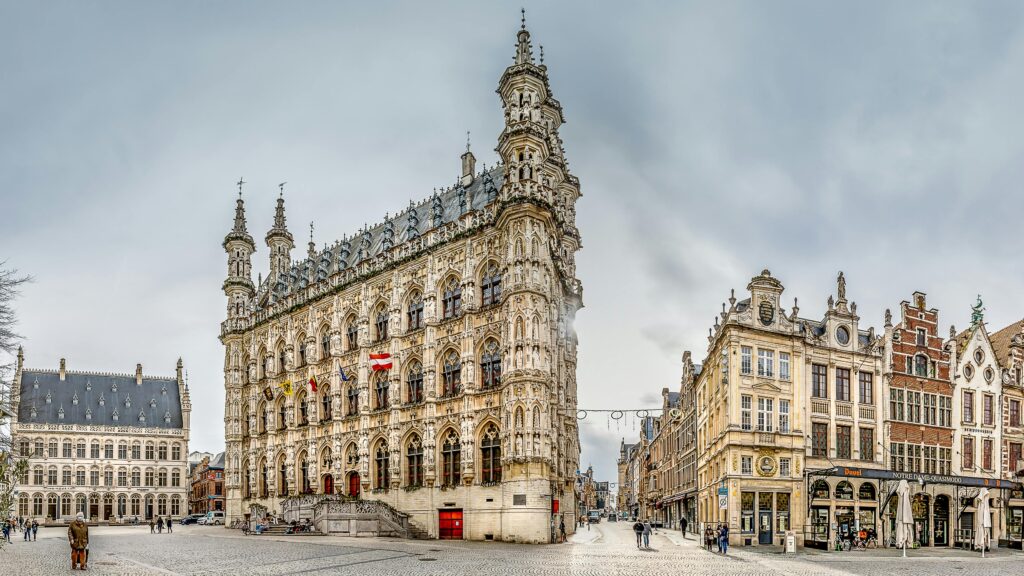
The course was also very enriching for me personally. I became more confident in using English and actively making contacts – this is a valuable experience, especially when travelling alone. I was deeply impressed by the openness and enthusiasm of the other participants. Everyone was passionate about their subject, but still spoke honestly about the challenges that come with doctoral research. In addition to the technical aspects, it was great to get to know Leuven and its university – from the joint conference dinner in impressive surroundings to the city tour full of local insights. I made new connections that offer new opportunities – such as access to measuring equipment or support with questions – and that could develop into real friendships. This trip showed me once again how inspiring research can be – and it gave me new motivation to pass on the knowledge I have acquired and to continue working with my new understanding.