

Moritz Czyrnia is a doctoral candidate at the Professorship of Industrial Management, Production Management and Logistics. In June, he travelled to Bosnia -Herzegovina to attend the PRO-SLO PhD School 2025. The focus was on the so-called SLO – Social Licence to Operate, i.e. social acceptance of large projects.
Your research topic briefly explained: What is it about and what makes it so exciting for you?
My doctoral research focuses on the recycling of photovoltaic modules in Germany, specifically on planning this process. PV modules contain valuable materials such as lithium, copper and glass, which are of great importance to industry and should preferably be kept within the European cycle. To achieve this, we need to understand how future quantities of end-of-life modules will develop and where they will accumulate. One of the key challenges is to plan an efficient collection, transport and recycling system that makes both ecological and economic sense. It is precisely this combination that particularly excites me about my research topic, especially in terms of its relevance for the future, practical implications and social responsibility.
How did your time abroad contribute to your doctoral project?
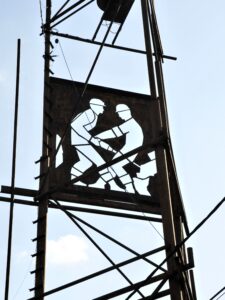
The PRO-SLO PhD School in Vareš (Bosnia -Herzegovina) gave me valuable insight into the importance of social acceptance projects in the raw materials sector. It began with a week of lectures, followed by several weeks of group work and a week-long stay on site. This combination showed me how diverse the perspectives on the raw materials industry are and helped me to understand them in depth. In Vareš, many things became more tangible: the mining town, which was marked by the war in the 1990s, is undergoing major change due to the activities of Adriatic Metals, a company with a significant mining project. Seeing how important exchange, transparency and participation are, has fundamentally changed my view of such projects. The experience has made it clear to me that acceptance and clarity of communication are crucial in socially relevant projects – including PV recycling, where public participation plays a central role.
What did you gain personally?
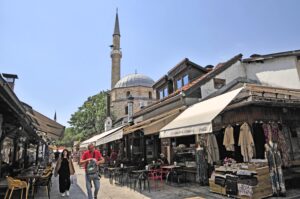
I was particularly impressed by how open, warm and interested the people in Bosnia – Herzegovina were. Many personal conversations showed me how closely economic developments are linked to individual life stories. At the same time, I learned how important it is to build bridges between all parties involved so that large projects can sustainably succeed. The close cooperation with international doctoral candidates from other universities was also very enriching for me – some of these contacts still exist today. Personally, the stay was a step out of my comfort zone and helped me to identify my own interests more clearly. The importance of critical raw materials – both through their extraction in mining and their recovery in recycling – became clear to me there for the first time and had a crucial influence on my path towards my doctoral thesis topic today.