
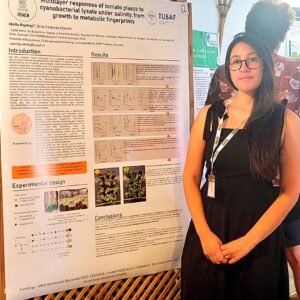
Rayitray Althue Abello Barriga is a PhD student in the Biology/Ecology Working Group. As part of a double-degree PhD programme, she conducts her research at both TU Bergakademie Freiberg and the University of Santiago, Chile. In September, she travelled to Portugal to attend the Plant Environmental Physiology Group Field Techniques Workshop.
Your research topic briefly explained: What is it about and what makes it so exciting for you?
Across the vast Atacama Desert—one of the driest places on Earth—microscopic life has evolved remarkable ways to survive extreme radiation, drought, and salinity. My research draws inspiration from this resilience by studying cyanobacteria from these environments and exploring how the natural compounds they produce can help tomato plants cope with salt stress. Many of these biomolecules resemble those that plants use to regulate their own defense and adaptation processes, creating a kind of molecular dialogue between them. Understanding this interaction is essential because salinity is one of the biggest challenges to agriculture, reducing soil fertility and limiting food production worldwide. These desert microorganisms, therefore, offer a fascinating biotechnological tool to strengthen crops.
How did your time abroad contribute to your doctoral project?
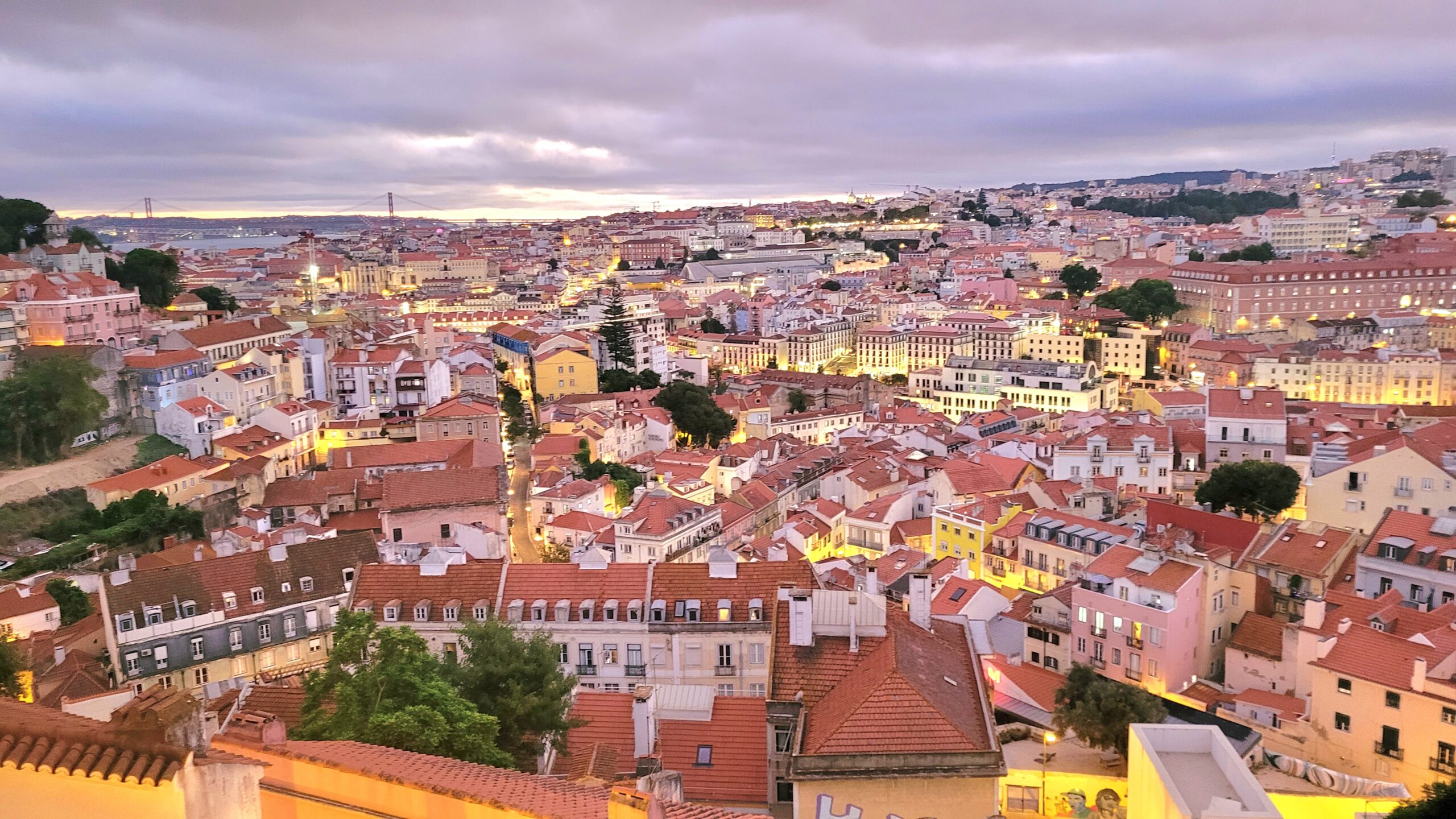
My time abroad, particularly attending the PEPG Field Techniques Workshop in Lisbon, was transformative for my research. I learned new methodologies to measure plant and environmental parameters under stress conditions, which I can apply to future field experiments. I also had the unique opportunity to learn directly from the people who design and produce the technologies used for these measurements—an experience I had never had before. Beyond the technical skills, exchanging ideas with colleagues from diverse backgrounds broadened my perspective on experimental designs and analytical approaches. I also learned to think beyond the individual plant—to explore processes at the crop system level—which inspires me to pursue broader questions in my future research after completing my PhD. This experience renewed my motivation and inspired me to think on a larger scale for my future research.
What did you gain personally?
Participating in the workshop in Lisbon was a truly enriching experience. I initially expected only to learn technical skills in plant science, but the reality went far beyond that. I found an open and relaxed environment where learning happened naturally, surrounded by other PhD students who face similar challenges and by experienced scientists who shared their journeys with honesty and humility. These exchanges created a strong sense of connection and mutual encouragement that motivated me deeply. The workshop combined excellent scientific training with memorable moments of good local food, laughter, and inspiring conversations