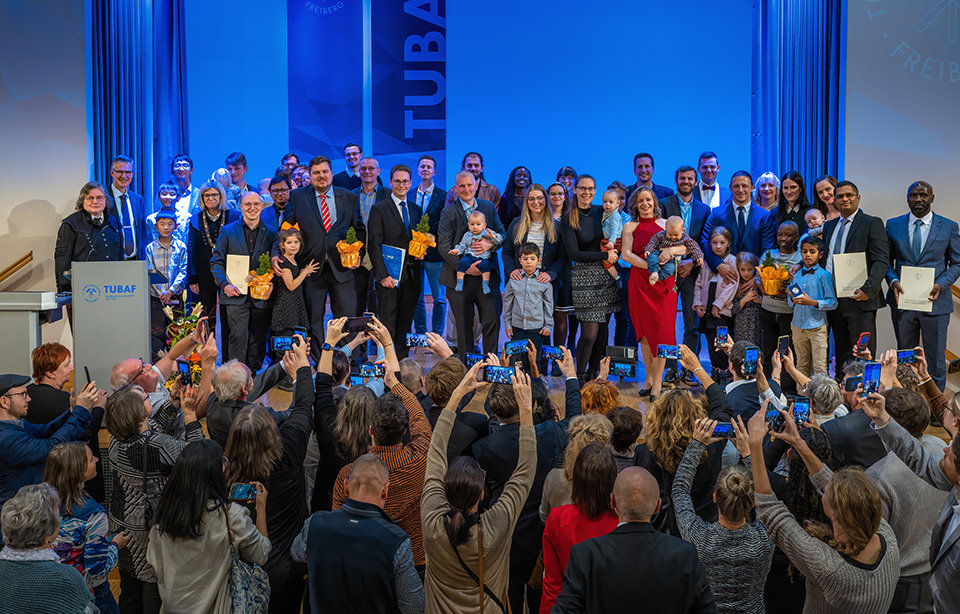
Der KlarText-Preis für Wissenschaftskommunikation richtet sich an Promovierte, die ihre Forschung verständlich erklären können – klar, präzise und ohne Fachjargon. Der Preis wird von der Klaus Tschira Stiftung vergeben und zeichnet exzellente Beispiele gelungener Wissenschaftskommunikation aus.
Im Fokus steht die Frage, wie komplexe Forschungsergebnisse so vermittelt werden können, dass sie auch außerhalb der eigenen Fachcommunity nachvollziehbar sind.
Photo showing members of the first cohort at a science forum at TU BAF in 2024
The YEMAYA Women in Science Project represents an innovative program aimed at empowering women in STEM disciplines and advancing sustainable development in the rural regions in Sub-Saharan Africa affected by unsustainable mining. Launched in 2019, this initiative highlights a collaborative effort among five universities across Africa: the University of Nigeria, Nsukka (UNN); Machakos University, Kenya (MU); Taita Taveta University, Kenya (TTU); University of Mines and Technology, Ghana (UMaT); and University of Environment and Sustainable Development, Ghana (UESD), in conjunction with the TU Bergakademie Freiberg (TUBAF) in Germany.
Initially funded by the BMBF and led by Prof. Yvonne Joseph, now supported by the Erasmus mobility program and continued by Dr. Kristina Wopat in cooperation with Prof. Yvonne Joseph & 10 professors as well as the International University Center, YEMAYA focuses on enhancing the competencies of female researchers in partner universities in obtaining relevant sustainability skills, including biodiversity management techniques, water and soil monitoring and cleaning, climate protection, and sustainable mining in a training-of-trainers approach. Beneficiaries then share their skills and knowledge with their home institutions and communities. Under that project, participating African universities have adopted the model community „YEMAYA Village“, where they implement project recommendations and research to facilitate social change and development. The project further strengthens institutional collaborations and promotes innovative teaching and research practices.
Key Initiatives and Achievements
Building a Robust Collaborative Network
Since its inception, YEMAYA has hosted nearly 30 virtual coordination meetings, helping to refine implementation strategies and evaluate progress. It has also organized four major African colloquia during the Freiberger University Forum, where discussions on resource extraction impacts, environmental sustainability, and Africa’s role in renewable energy transitions engaged more than 850 participants from over 20 countries.
Strengthening Partnerships Through Exchange Visits
In June 2023, African project coordinators participated in comprehensive workshops at TUBAF, engaging with German researchers and visiting sites that exemplify sustainable practices, such as mine rehabilitation, water treatment, and biogas production (Figure 2). Several scientists from TUBAF also made teaching trips to partner institutions in Africa to promote knowledge sharing and strengthen bilateral relationships. Activities included meetings with management, delivering guest lectures, field trips, and conducting workshops that reached more than 1,620 beneficiaries.
Institutional representatives in a laboratory tour at TUBAF in 2023
Preparing the Future Generation of Women Scientists
An essential feature of Yemaya is the hands-on research and self-management training provided to selected female doctoral students. In 2024, eight (8) female doctoral students (First cohort) from partner institutions completed a six-month research residency at TU BAF. They engaged in advanced laboratory training, pursued cutting-edge research pertinent to their PhD subjects, and received guidance in project management, critical thinking, conflict resolution, and science communication.
YEMAYA Design Thinking workshop in 2024
Their research achievements include innovations in mine water treatment, soil decontamination, environmental monitoring using nanosensors, and the enhancement of renewable energy production through optimized biocrude synthesis (Figure 4). These developments are crucial for tackling pressing environmental and social challenges faced by Africa’s mining communities. Most importantly, the YEMAYA project is nurturing a spirit of resilience and innovation among women scientists, empowering them to thrive in traditionally male-dominated fields and promote sustainability-oriented transformations in their nations.
Candidates in a laboratory tour at TUBAF in 2024
Entrepreneurship
Entrepreneurship and self-management training were consistently offered to harness the beneficiary participants‘ creative thinking and problem-solving skills. Through the „Project of Hope“ initiative, the young women obtained key skills on how to create social interventions for community challenges and implement efficient project management strategies to realize them in their home communities. This forward-thinking strategy is helping them to move from idea imagination to real implementation within their societies.
Conclusion
The YEMAYA Women in Science Project goes beyond simple capacity building. It represents an optimistic project-based journey towards sustainable community development, gender equality in science, and global collaboration through developing the potential of young African women in STEM and reinforcing institutional partnerships. YEMAYA is paving the way for a brighter and more sustainable future for Africa by promoting intra-African collaborations to foster development. Knowledge and facility-sharing activities further promote faster solution-building by cutting down the need to reinvent the wheel for new technologies in Africa.
Subject to the provision of funding by the Free State of Saxony, the TU Bergakademie Freiberg is once again offering state scholarships for graduate funding.
The doctoral project must not have started when the application is submitted.
Applications must be sent by email to the to the Graduate and Research Academy, attn: Ms. Langer, , by August 18, 2024.
Detailed information on the scholarship, the application process and the documents to be submitted can be found here.
Programm: Transformationswissen über Demokratien im Wandel – transdisziplinäre Perspektiven
Dieses Förderangebot der VolkswagenStiftung adressiert gesellschaftliche Herausforderungen, die durch Veränderungsprozesse von demokratischen Strukturen hervorgerufen werden. Wissenschaftler*innen und Partner*innen aus der (Zivil)Gesellschaft bearbeiten dazu gemeinsam Fragestellungen und entwickeln aus den Forschungsergebnissen Handlungsempfehlungen für relevante Akteure in Politik, Wirtschaft oder (Zivil)Gesellschaft.
Nächster Stichtag: 29.10.2024
Nähere Details und Informationen für Bewerbende sind hier zu finden.
Programme: Transformational Knowledge on Democracies under Change – Transdisciplinary Perspectives
This funding programme of the Volkswagen Stiftung addresses social challenges caused by processes of change in democratic structures. Scientists and partners from (civil) society work together to address these issues and use the research results to develop recommendations for action for relevant players in politics, business or (civil) society.
Next deadline: 29 October 2024
More details and information for applicants can be found here.
Das Alfried Krupp Wissenschaftskolleg Greifswald vergibt für das akademische Jahr 2025/ 26 bis zu sechs Alfried Krupp Senior-Fellowships und bis zu acht Alfried Krupp Junior-Fellowships. Es ermöglicht den Fellows, sich unabhängig von Lehrverpflichtungen und Verwaltungsaufgaben auf ein größeres wissenschaftliches Projekt zu konzentrieren. Um ein Alfried Krupp Senior-Fellowship können sich durch herausragende Leistungen in Forschung und Lehre ausgewiesene Persönlichkeiten aus der Wissenschaft bewerben. Die Alfried Krupp Junior-Fellowships werden an besonders qualifizierte promovierte Nachwuchsforschende vergeben.
Bewerbungsfrist: 31.08.2024
Die Bewerbungsvoraussetzungen und weitere Informationen finden Sie hier.
Call for tender Alfried Krupp Fellowships 2025/26
The Alfried Krupp Wissenschaftskolleg Greifswald is awarding up to six Alfried Krupp Senior Fellowships and up to eight Alfried Krupp Junior Fellowships for the academic year 2025/26. It enables the fellows to concentrate on a major scientific project independently of teaching commitments and administrative tasks. Outstanding academic personalities with a proven track record in research and teaching can apply for an Alfried Krupp Senior Fellowship. The Alfried Krupp Junior Fellowships are awarded to particularly qualified young researchers with a doctorate.
Application deadline: 31 August 2024
The application requirements and further information can be found here.